

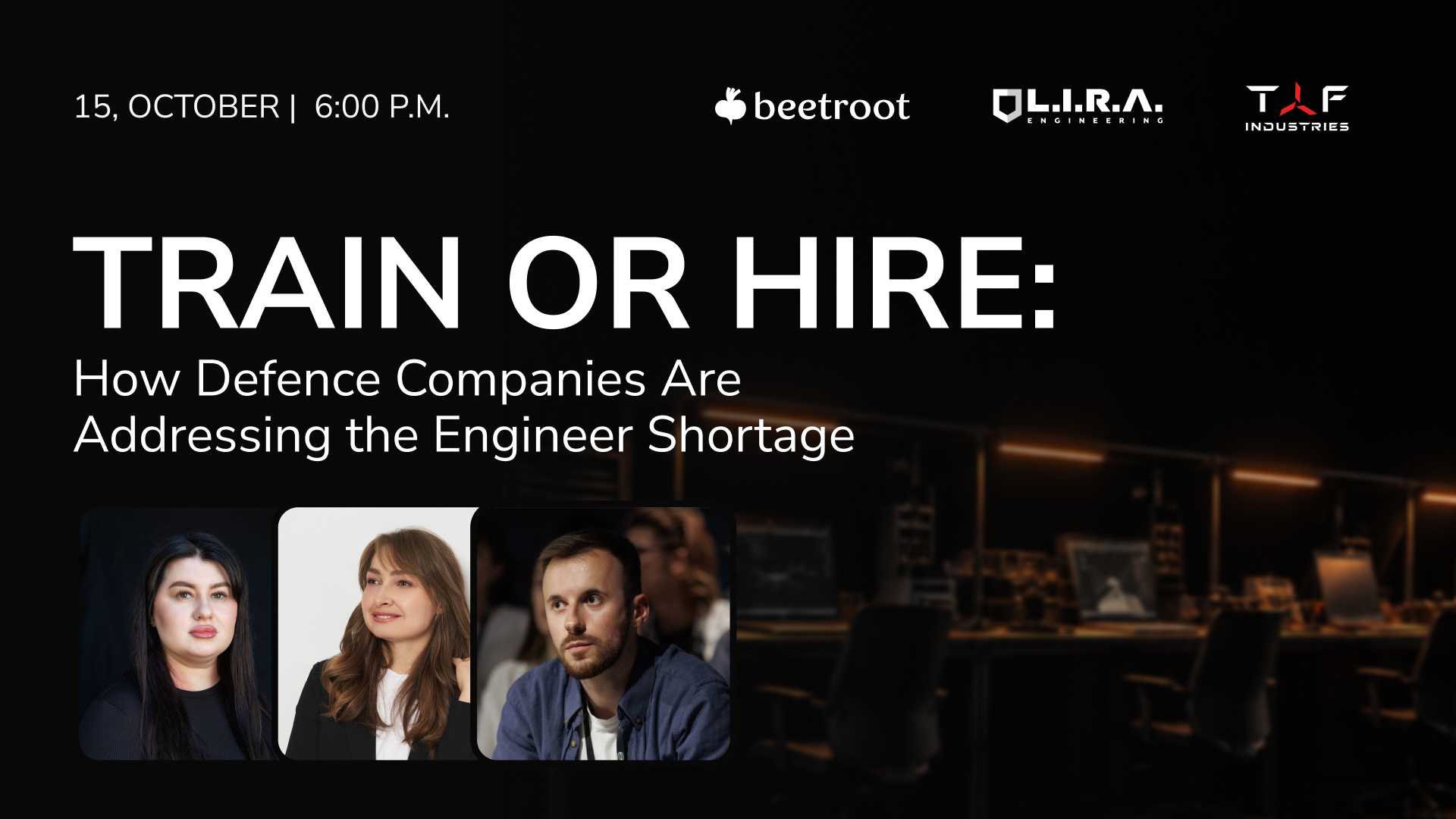
A webinar for founders, CEOs and CTOs of defence and dual-use companies. October 15, 18:00, online, free of charge.
Production plans are set a year ahead. The embedded engineer vacancy has been open for five months. The recruiter is doing everything right, the funnel is moving, but there’s no one to hire.
In the first quarter of 2026 alone, defence employers posted 3,005 vacancies on DOU. For comparison, there were 2,283 in all of 2024. Meanwhile, there are fewer candidates than positions: in 2023, a vacancy drew 15–18 applications on average; now it’s 7–9. In mainstream IT, some vacancies get more than 80.
Engineering roles feel this most acutely.
“Embedded, firmware, FPGA and RF are the positions that take us longest to fill. Finding such a specialist takes 3–6+ months, and to build a solid shortlist you need to reach out to 200–400 people, two to three times more than for other roles.” — Marta Khrypiak, Human Resources Director, Lira Engineering
Broadly, there are two options: poach the same people from one another and push up rates across the whole market, or grow your own.
This webinar from Beetroot Academy is about the second option, broken down into numbers and processes.
What we’ll cover
Why the vacancy stays open. The state of the defence candidate market from a recruiting agency’s perspective: which engineering roles have a talent pool and which the market will fill slower and with more difficulty. How long a search for scarce roles takes and what it costs the company once you factor in the time spent on it.
What happens to a person inside the company. How long it takes an engineer to start working independently and what shortens that time. How structured onboarding differs from a situation where the team lead looks after a newcomer “in between other tasks”. What you gain by distributing expertise across the team, so a critical area no longer depends on a single person. And why engineers leave growing companies when they can’t see a career path inside.
A separate part is the reason to come if your company has no HR: what a minimal working learning system looks like in a 30-person team with no HR department and no L&D manager. First steps you can realistically take without a budget or a dedicated person.
How it’s solved from the outside. A dedicated cohort built around a specific company’s profile, upskilling an existing team for new tasks, and how to see a person’s level before you hire them. We’ll present our own anonymised B2B cases: what the company asked for, what we did, and what changed.
Q&A. We collect questions throughout the event and answer them at the end.
Who it’s for
- Founders and CEOs of defence and dual-use companies at the growth stage, where production plans are already outpacing hiring.
- CTOs and heads of engineering, who feel the shortage most acutely and are usually the first to come with the request “we need to train our own people”.
- HR generalists and operations leads who are effectively doing the L&D job before it has that name.
- If your company has 30 people and no HR at all, this event is for you too. The minimal working model we’ll show is designed for companies without a dedicated learning department.
Speakers
- Marta Khrypiak, Human Resources Director, Lira Engineering — the voice of the labour market. The state of defence recruiting, the scarcest engineering roles, and the real timelines and costs of filling positions.
- Yevheniia, Head of Adaptation and Development, TAF Industries — the view from inside a manufacturing company. Engineer onboarding, in-house training, the impact on R&D speed, and team retention.
- Bohdan Yarmoshchuk, Head of Sales, Beetroot Academy — how a training programme is built around a specific company’s profile and what results it delivers.