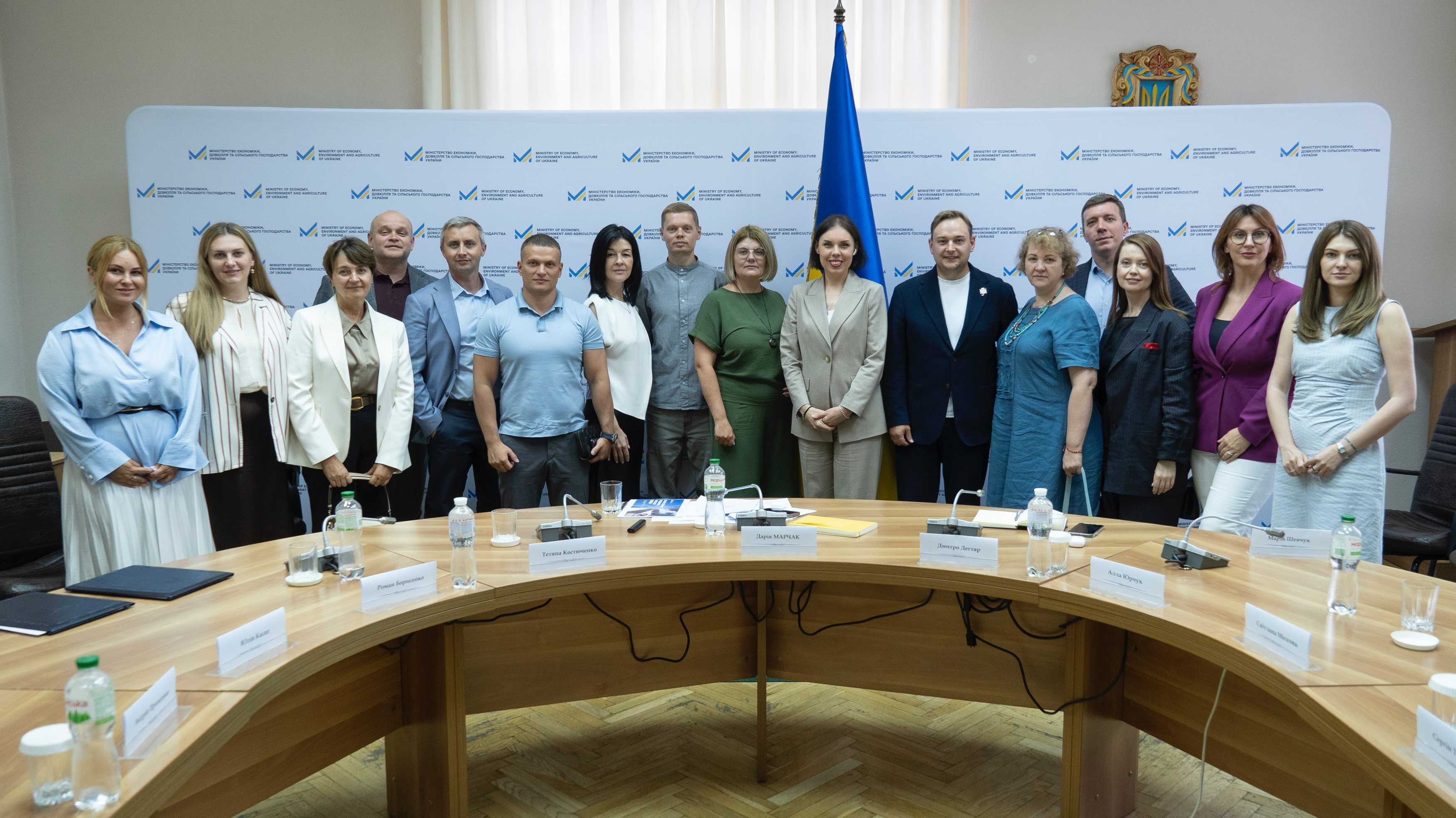
Maria Shevchuk, Executive Director of the IT Ukraine Association, joined the panel discussion ‘Building Cyber Resilience: Ukraine’s Collaboration with International Partners’ on March 11, as part of the Kyiv International Cyber Resilience Forum 2025.

Before the full-scale war, Ukraine’s IT sector showed significant growth – up to 30% annual increase. The most consequential years for the defense technologies and cybersecurity industries were the last three.
Now we are probably the most motivated country in the world – overcoming challenges, working in extremely difficult realities. We are seeking as many cooperation opportunities as possible, both with the public and private sectors, especially beyond Ukraine. Ukrainian companies need to go global and export the unique Ukrainian experience,
— emphasised Maria Shevchuk.
Despite all the attacks, Ukrainian IT companies continue to actively cooperate with international partners, particularly on projects aimed at strengthening Ukraine’s cyber resilience, supported by governments, including those of the UK and Japan. Among such projects that continue to be active: the Japan-funded project under UNIDO and special grant programs aimed at partnerships with the cybersecurity sectors of Finland and Japan’s IT ecosystems.
The IT Ukraine Association is also actively developing connections with international organisations – we are national representatives in global associations, such as DigitalEurope. Our involvement aims to strengthen digital security and expand opportunities for Ukrainian companies in international markets.
As part of our membership in DigitalEurope, we are participants in the European project consortium CyberHubs – the construction of a network of seven cybersecurity skill centers aimed at strengthening the cybersecurity skill ecosystem by creating innovative educational centers. The project’s implementation is planned for three years, with the main goal being to raise the competency levels of cybersecurity specialists and ensure the sustainable development of the industry.
The CyberHubs project has published seven national strategies for developing cybersecurity skills, aimed at overcoming the cybersecurity skills shortage in Europe and creating a more resilient workforce.
These reports outline targeted approaches to enhancing cybersecurity competencies across Spain, Slovenia, Lithuania, Hungary, Greece, Belgium, and Estonia. Each strategy provides a roadmap tailored to the unique challenges and opportunities in its respective country, contributing to a more cohesive European cybersecurity skills framework.
Finally, Estonia, known for its advanced digital landscape, aims to reinforce its cybersecurity workforce by integrating new learning methodologies, supporting ongoing professional development, and enhancing collaboration between government, academia, and industry.
The strategy also focuses on expanding training for professionals in critical infrastructure and AI-related cybersecurity roles. These approaches and experiences significantly resemble those of Ukraine – and therefore, Ukraine can actively use Estonia’s analytics, educational materials, and methodology.
Yesterday, Calibrated, together with the IT Ukraine Association, EBA, LOOQME and MMR, launched a study on the communication readiness of Ukrainian businesses for cyber and information crises. How ready is your business for crisis communication during cyber and information incidents? Take the survey to assess your company’s readiness for communications during crises and get insights from the upcoming industry report: shorturl.at/PaO3Z

This is one of the projects that concerns people, employees, the real sector, and solving some gaps and needs of Ukrainian businesses, related not only to the cybersecurity ecosystem but also to real projects,
– emphasised Maria Shevchuk.
Last year, the IT Ukraine Association launched four industry committees, one of which is the CyberTech Committee to promote interaction between business, government, and international organizations in addressing cyber threats. As part of these efforts, we also hold several international cybersecurity roundtables annually, where participants discuss best practices and develop cybersecurity strategies.