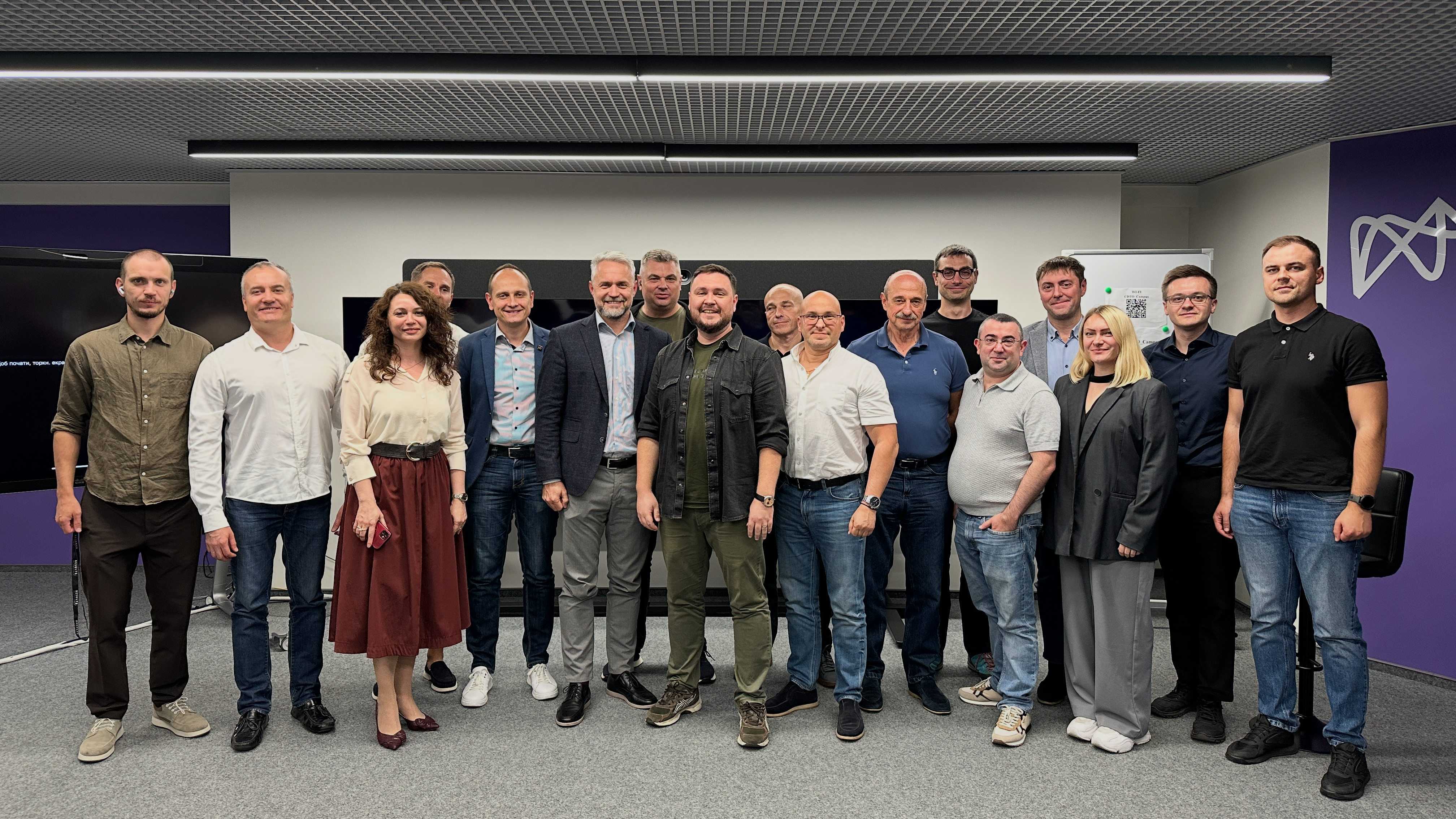
On 28 April, the American University Kyiv hosted another gathering as part of the HR Meetups: Powered by AUK initiative — a joint project of the IT Ukraine Association and AUK. This time, HR leaders from leading Ukrainian IT companies focused on a topic that has already become everyday practice: intercultural hiring and international team management.
Moderated by Oksana Rudiuk (PR Director, American University Kyiv), the session brought together an open, substantive, and practical discussion with the participation of Iryna Kononenko (GlobalLogic), Jake McGrew and Liudmyla Dolhonovska (American University Kyiv) and Nataliia Ivoniak (Amrop Ukraine).

Cultural literacy is the new baseline HR competency. The war has accelerated the integration of Ukrainian professionals into international teams, and Ukrainian companies are increasingly working with foreign partners and distributed workforces. What is considered the norm in one culture may become a source of conflict in another — and an HR function that ignores this risks losing talent before it is even onboarded. Training in cultural differences and communication styles is no longer optional; it is an investment that directly affects retention and team performance.
Communication is not a “soft” skill — it is business infrastructure. How feedback is received, attitudes towards hierarchy, reactions to humour or overtime — all of these shape the day-to-day workings of a team. Well-structured intercultural communication directly influences the speed of processes, the quality of decisions, and business outcomes. A misstep here costs not only reputation — it costs time, people, and money.
The globalisation of the labour market will only intensify. Potential labour migration and the growing number of international teams mean that cultural sensitivity will become an increasingly important competency — for both HR professionals and leaders alike. The time to prepare, to study the particularities of different countries, and to invest in cross-cultural practices is now, not when the challenge becomes critical.

Nataliia Ivoniak shared practical experience from the field: companies are already operating globally, yet management often remains local — and this is precisely where the most significant gaps arise. Distributed teams have become the norm, entry into new markets has accelerated, and intercultural interaction is now an everyday reality to which not all management models have had time to adapt.
Three dimensions in which intercultural teams most frequently break down:

We thank all participants for their engagement, candid questions, and excellent networking. We look forward to the next gathering — it promises to be even more insightful.