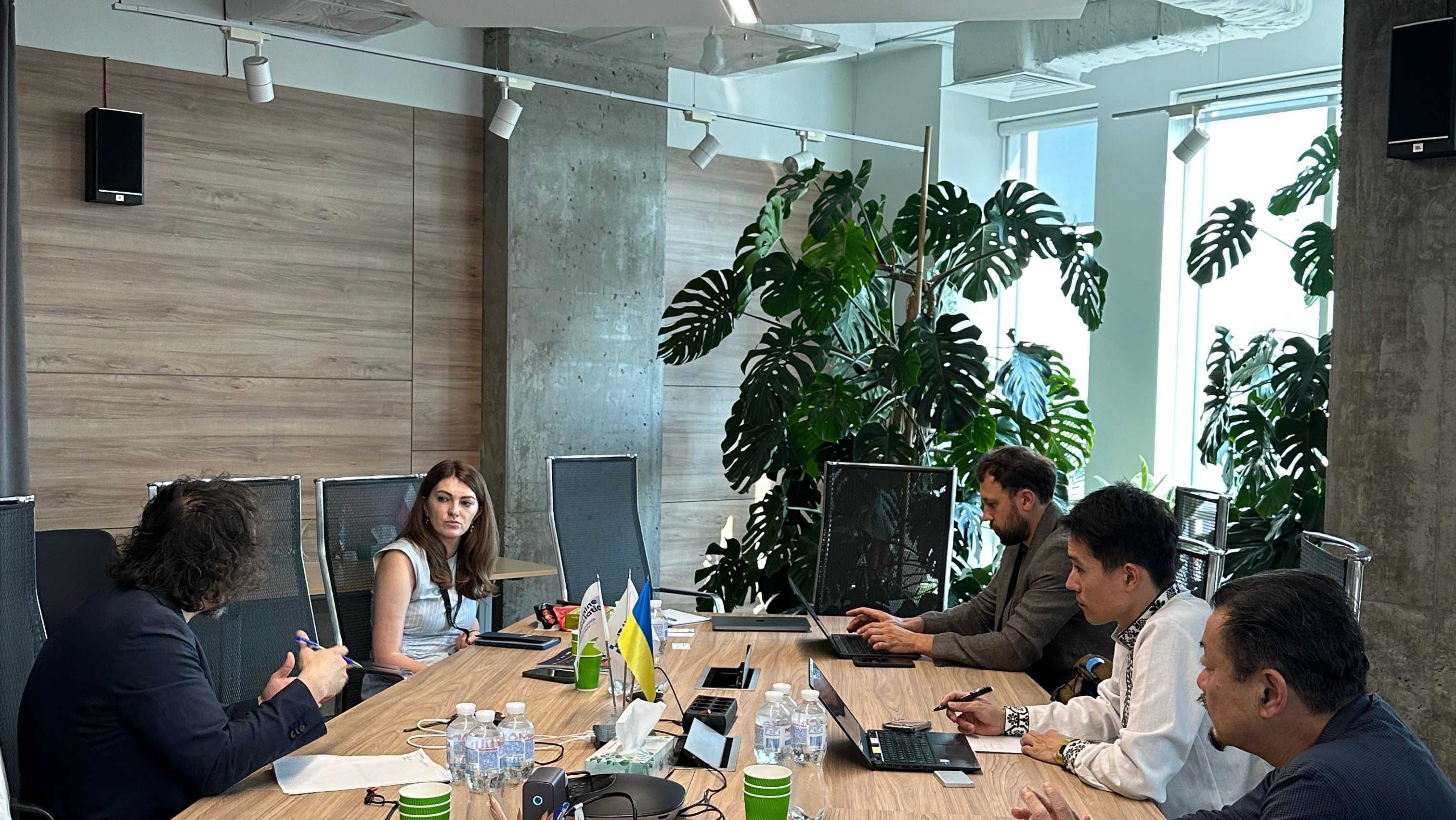
The largest conference on IT business development, Tech360: Policy Meets Technology, brought together over 600 IT industry leaders, public sector representatives, and more than 50 speakers around a shared vision for Ukraine’s technological development.

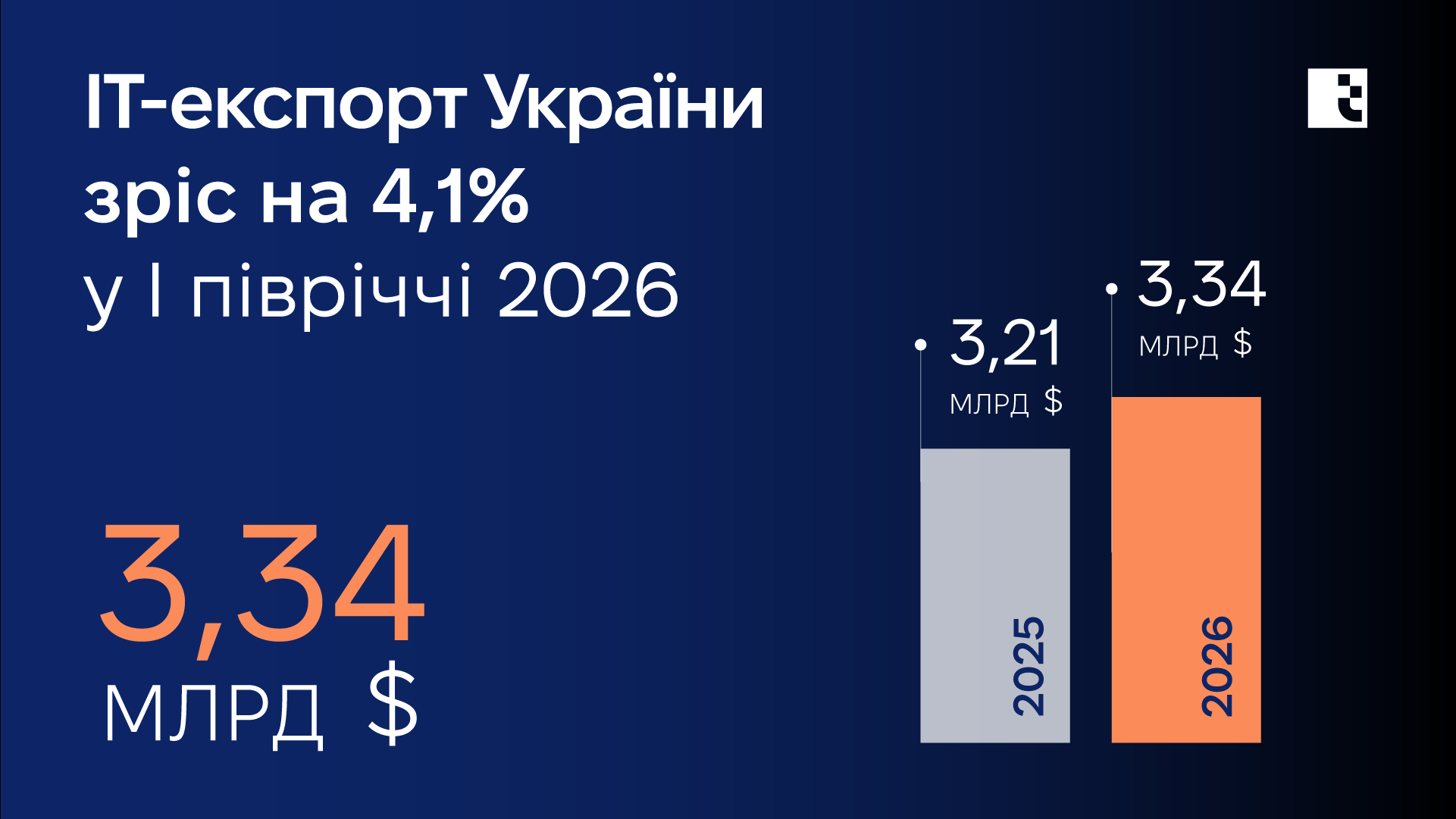
Today, the Ukrainian IT market is worth $7.85 billion, employs over 305,000 specialists, and comprises more than 2,000 companies operating both globally and domestically. Our task is to create conditions that convert this scale into new products, investments, and long-term growth,
— said Mariia Shevchuk, Executive Director of the IT Ukraine Association.
Welcoming remarks were also delivered by Laurent Dupuch, Chairman of the Board at UKRSIBBANK BNP Paribas Group, and Tetiana Anishchuk, Deputy Head of the STEP IN 2 EU programme | Deutsche Gesellschaft für Internationale Zusammenarbeit (GIZ) GmbH.
It is essential to discuss IT and the ways it supports development, shapes the country’s future, and strengthens its resilience. In recent years, Ukraine’s IT sector has grown at an extraordinary pace, and we can see that despite the full-scale war, the industry has become a strong pillar for the country and has integrated across multiple sectors. IT is crucial for Ukraine as it helps counter challenges and drives future growth and development. For UKRSIBBANK BNP Paribas Group, technology is equally important because it enables us to implement and digitalise processes, increase efficiency, serve our clients effectively, and remain a reliable partner both for them and for Ukraine,
— shared Laurent Dupuch, Chairman of the Management Board, UKRSIBBANK BNP Paribas Group.
By supporting both the Government and businesses, we help unlock access to European markets for SMEs and strengthen the role of Ukrainian IT as a driver of economic growth—particularly through the development of the ‘Pulse’ platform and the automation of state permit systems,
— added Tetiana Anishchuk.

This year’s discussions focused on local IT market trends, new investment models, emerging markets for expansion, labour and education shifts, and the development of digital sovereignty.
Ihor Polych, Vice President for International Cooperation at the IT Ukraine Association and CEO of Devlight, presented key figures from the Code of the Economy study: IT contributes around 3.2% of GDP and generates $6.6 billion in exports. Every hryvnia in the IT sector creates an additional 1.09 hryvnia in the economy, and each IT specialist supports 2.29 additional jobs in other sectors. The sector remains resilient, with High-IT growth at +19.9% and a gradual shift towards the product segment (39%).

During the “Digital Economy as a Driver of Ukraine’s Economic Growth” interview, speakers discussed the shift from simple digitalisation to deep process re-engineering, which transforms management culture and the rules of the game in the economy. Oleksandr Tsybort, Deputy Minister of Economy, cited successful cases such as the Diia app, the Pulse system, and AI implementation for licensing.
Digitalisation is no longer a standalone IT direction—it is a method of implementing economic reforms. A digital product is not an add-on but the very form and instrument of reform,
— Oleksandr Tsybort stated.
Stepan Mitish, Vice President and Head of EPAM Ukraine, highlighted the fundamental transformation of the IT sector after the full-scale invasion — from a “reliable executor” model to a strategic partner creating value in any conditions. This transition is based on three pillars:
Speakers also discussed AI’s impact on defence, healthcare, education, and the future of programming professions, as well as the role of digital solutions in combating corruption and accelerating citizen-government interaction.

During the discussion on Ukraine’s local IT market, experts highlighted the rapid growth of DefenceTech: production has increased 12-fold and capacity 35-fold since the start of the full-scale war. Ukraine has the potential to strengthen its position among leading countries in military IT technologies and AI applications for drones and interception systems. In banking, AI is used for hyper-personalisation and autonomous assistants, with emerging niches such as Embedded Finance, active digitalisation of industry, and 5G deployment enabling Edge Computing and real-time applications. All innovations are underpinned by strong human capital, ensuring the country’s competitiveness globally.
The Ukrainian IT sector is developing dynamically. Demand for Ukrainian technologies is formed organically through real cases and results. Continuing on this path will open access to new investments and strengthen Ukraine’s position as a technological player. It is therefore important to support the country’s IT professionals and foster the IT community. For example, the bank actively promotes digitalisation, collaborates with industry associations and clusters, and serves nearly 30% of the Ukrainian IT market. At the same time, it develops its own IT community — UKRSIBTECH, where over 550 IT specialists implement innovations in business processes and deliver modern digital solutions to 2 million clients,
— shared Andrii Kashperuk, Deputy Chairman of the Board, Director of Retail Business at UKRSIBBANK BNP Paribas Group.

Artem Romaniukov, Head of the Ministry of Defence Digital Transformation Directorate, shared his vision for Ukraine’s defence digital transformation and the role of the IT ecosystem in national security. Key areas include personnel management, electronic document workflow, AI implementation for routine processes and combat systems, digital healthcare, and procurement and resource modernisation. The Ministry actively cooperates with IT companies through tenders and outsourcing, with Chief Digital Officers (CDTOs) ensuring rapid technology integration.

During the panel on technology investment, experts discussed how Ukraine’s IT ecosystem is shaping a new development model, combining early-stage venture capital, corporate investment, government programmes, and grant funding. They highlighted growth in DefenceTech and AI, recovery of startup investment, the role of Diia.City and BRAVE1 in accelerating the cycle from prototype to market, and the importance of a systemic approach to transform innovations into large-scale, globally competitive tech companies.

Victor Katrenich, Deputy Chairman of the National Development Institution (NUR), presented an updated digital platform for financial support of micro, small, and medium enterprises, including those in IT. Platform 2.0 automates the full grant and loan cycle — from verification via Diia to monitoring fund usage — ensuring transparency, minimising human error, and complying with European cybersecurity standards.

Exclusively for Tech360, Klim Savchuk, Head of Strategic Partnership Development at Robota.ua, presented research on the IT talent market: in 2025, vacancies fell by 21% year-on-year, while average salaries remain highest in Software Engineering and Web Development. The market is shifting from quantity to quality: companies build strong teams, competition remains high for junior positions, and demand for senior specialists is stable. The most promising areas are AI, Data, Automation, Cybersecurity, Cloud, and DevOps, with a trend towards “hybrid” specialists combining technical and business skills; practical experience and continuous upskilling are key to success.

An important continuation of the labour market discussion was the experts’ debate on talent retention in Ukraine, including:
Today, tech teams choose where to live and work primarily based on the environment — one that is comfortable, safe, and offers growth opportunities. But this environment does not emerge spontaneously — it is shaped by infrastructure, strong communities, collaboration opportunities, and investment. These factors determine where new technology hubs will appear and where entrepreneurs will move,
— noted Volodymyr Garazd, CEO of GORO Development, CEO of GORO Mountain Resort.

During the discussion on digital sovereignty and globalisation, experts debated the balance between using global platforms and creating independent technological solutions in finance, communications, and AI, emphasising control over critical data, legal requirements to return servers to Ukraine, and the technical challenges involved. Participants concluded that a hybrid data storage architecture is the most viable model for security and competitiveness, with digital sovereignty defined not by isolation but by clear rules protecting national interests in a globalised world.

In his address, Oleksandr Bornyakov, Acting Minister of Digital Transformation of Ukraine, spoke about technological sovereignty and building an “Agentic State,” stressing that indigenous technologies make Ukraine an equal player in the global market. Combining flexibility with Big Tech expertise allows the country to act as a partner for technology business development.
We are already building a state AI infrastructure — AI Factory — together with NVIDIA, and developing a national large language model (LLM) in partnership with Kyivstar. In parallel, we are preparing to launch Diia.City Invest, so that setting up venture funds in Ukraine takes weeks rather than months,
— emphasised Oleksandr Bornyakov.

The closing session of the main programme focused on IT sales and scaling in unconventional markets — MENA, LATAM, and Northern Europe. Speakers discussed balancing localisation and globalisation, competing with low-cost Indian developers, identifying high-value niche segments, and leveraging synergies from international partnerships.

A key component of Tech360: Policy Meets Technology was the roundtable sessions, where experts debated factors crucial to IT sector development, including:
We thank our partners, experts, and all participants for their engagement, knowledge sharing, and joint efforts to advance Ukraine’s IT industry.
Tech360: Policy Meets Technology is organised by the IT Ukraine Association.
General Partner: UKRSIBBANK BNP Paribas Group
Gold Partners: EPAM, GORO Development, LBS Cloud, Robota UA, SharksCode, UCLOUD
Conference supported by the international cooperation programme STEP IN 2 EU is co-funded by the German and Norwegian Governments, and the European Union under its EU4Business initiative and implemented by the German federal company “Deutsche Gesellschaft für Internationale Zusammenarbeit (GIZ) GmbH”. The programme aims to support the Government of Ukraine institutions in the EU accession progress on economic chapters and create better economic conditions and financing options for Ukrainian companies to benefit from integrating into the EU single market.
The content of this publication is the sole responsibility of the IT Ukraine Association and does not necessarily reflect the views of the governments of Germany and Norway, the EU, or GIZ.