In 2025, the Ukrainian IaaS/PaaS services market reached ₴7.2 billion, and when additional expenditures are taken into account, the figure evidently exceeds ₴10 billion. Yet these indicators conceal a less obvious truth about donor assistance, Ukraine’s defence capability, and the new balance of power between Ukrainian and global providers. This review is an attempt to understand who benefits, who pays, and where the market is heading next.
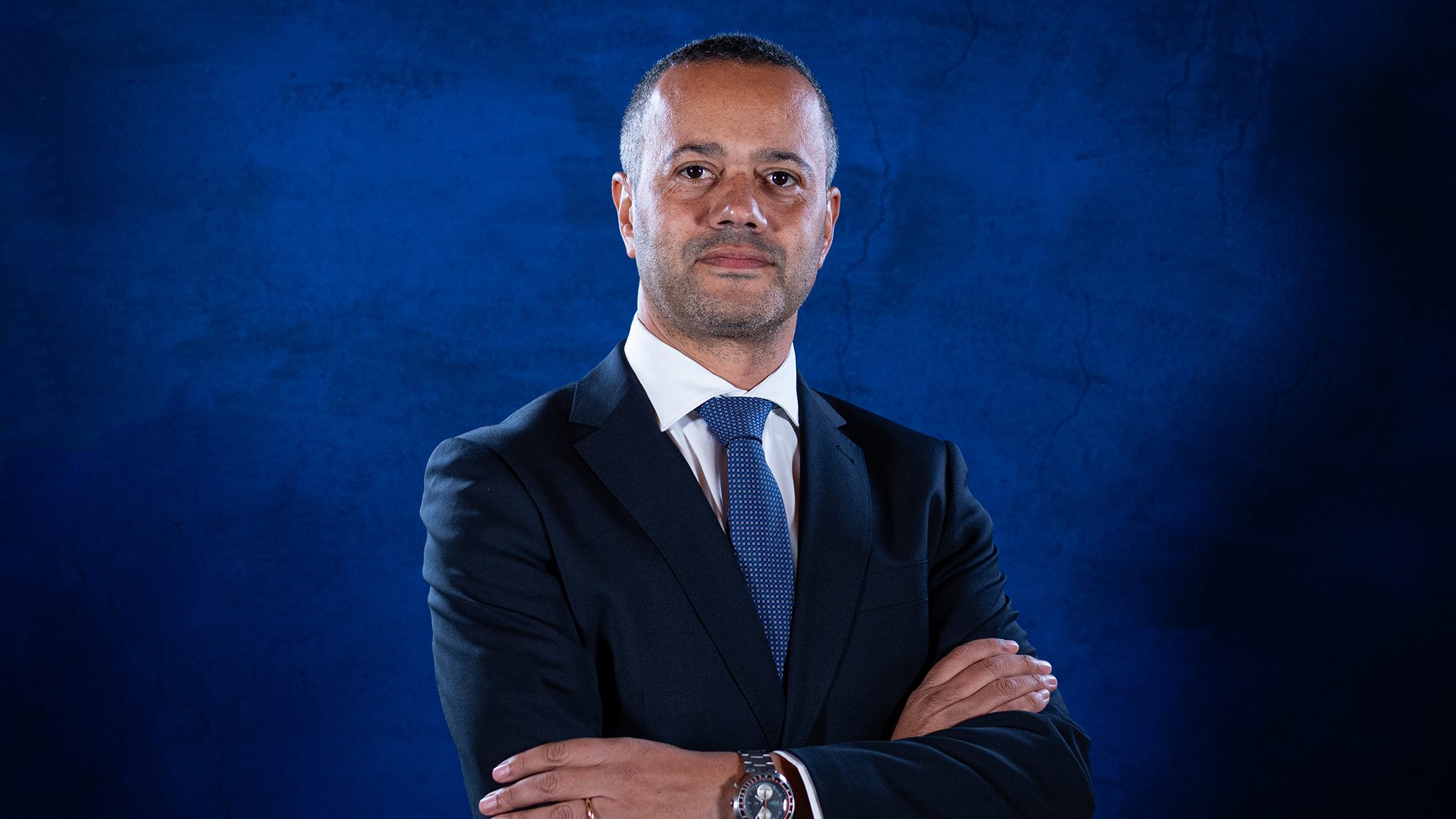
Maksym Ahieiev – one of the veterans of the Ukrainian IT industry with 32 years of experience. Co-Founder and Chief Executive Officer of De Novo. Co-Founder of the Ukrainian Association of Digital Sovereignty (DSUA).
Market Indicators for Cloud Services in 2025* *The methodology for calculating the indicators is described at the end of the review.
The consumption of IaaS/PaaS cloud services in Ukraine in 2025 exceeded, by my estimates, ₴7 billion. Yet what is striking is not the figure itself, but the dynamics. Back in 2021, the market volume stood at ₴1.3 billion, and in 2023 — ₴2.9 billion. Thus, over five years (2021–2025), the segment grew more than fivefold — and this without taking into account donor assistance in the form of cloud capacities provided by hyperscalers.
More than 80% of all foreign providers’ sales in Ukraine are accounted for by two global players — AWS and Microsoft Azure. In the segment of Ukrainian operators, 80% of volumes are delivered by three companies — De Novo, Gigacloud and the Parkovy data centre.
The fivefold growth of the cloud market during wartime confirms that cloud technologies are critically important for the country’s survival. The fastest growth in consumption of cloud services is observed in sectors that underpin resilience, defence capability and national autonomy. Weapons and energy are widely discussed, yet cloud infrastructure remains largely unnoticed — even though both the state and business prioritise it. Without clouds, a significant part of the economy would suffer severely. The war has only accelerated the inevitable transition to a new technological paradigm.
The ratio of foreign to Ukrainian providers has shifted from 64/36 in 2021 to 80/20 in 2025.
Digital Ramstein
In 2024–2025, Microsoft’s cloud service sales grew significantly, as the vendor discontinued free Azure services for many Ukrainian companies that had been using them since 2022. This was one of the key drivers behind the overall increase in the market share of global players in 2025.
A unique market practice is the donor assistance provided by a group of NATO countries, supplying Ukraine’s security agencies with computing resources, communications tools and cyber defence. There is even an informal term – “Digital Ramstein.” In practice, almost all payments for cloud services go to two companies – Microsoft and AWS. I would estimate these expenditures at around ₴3 billion, though whether they can be considered market-based is debatable. Most likely not. While Ukrainian consumers receive ready-to-use resources, the money circulates outside Ukraine. Yet such a large component cannot be excluded from calculations. Unlike outsourcing companies, the product of the Ministry of Defence’s work remains within the country.
Thus, the total consumption of IaaS/PaaS cloud services in Ukraine, taking all factors into account, can be estimated at over ₴10 billion or approximately $240 million.

$240 million for cloud services – is that a lot? For Ukraine, almost a quarter of a billion dollars represents a significant leap forward. Yet in neighbouring Poland, the IaaS/PaaS market is approaching $3 billion – more than 12 times larger. Interestingly, Russia demonstrates similar figures – up to $3 billion. However, its position among the world’s top five economies does not translate into genuine technological development for what is often described as a “blood-soaked petrol station.”
What about prices for Ukrainian cloud services? The Ukrainian cloud services segment is expanding under conditions of fierce competition for customers. As a result of this market rivalry, prices for cloud services from Ukrainian providers are in some cases more than twice lower than those offered by hyperscalers. All national providers offer data hosting both within Ukraine and in data centres across EU countries. This diversity enables clients to build more complex configurations of cloud infrastructure
Did the “cloud emigrants” win?
Almost four years into the full-scale war, it is possible to assess the choices made by two groups of cloud service consumers — those who decided to move their data to foreign clouds, and those who remained with domestic operators. In my view, there is currently no evidence proving the strategic correctness of relocating to clouds in other jurisdictions, nor of the mistaken choice of Ukrainian platforms. Neither group has lost. However, the “Ukrainian” group can be credited with a significant saving on cloud service costs compared with the “emigrants.
Clouds in Military AI Projects and the Risks of NATO “Cloud Assistance”
I would like to emphasise the contribution of military developers to the creation of industrial-grade AI systems. These are not pilot projects of start-ups that quickly burn out. The role of AI in equipping the Armed Forces of Ukraine — from the General Staff to battalion commanders — with digital tools for analysis, interaction and decision-making cannot be overstated. This example renders discussions about purchasing proprietary hardware irrelevant and has already led to a fundamental revision of certification requirements for combat IT systems in the field of information security.
Military AI projects are simply impossible without a cloud component. The digital transformation of the Armed Forces and the Ministry of Defence in recent years appears almost fantastical. Yet these technological breakthroughs have been enabled, in part, by external funding. The specificity of NATO countries’ “cloud assistance” lies in the fact that it is not paid for by the Ukrainian budget. Ukraine itself, either now or in the foreseeable future, will not be able to afford such sums to hyperscalers. Each additional year only increases Ukraine’s technological dependence not only on donors, but also on the services of two global companies.
Halting the use of systems such as Delta is an unacceptable option for obvious reasons. Therefore, we move forward with our eyes firmly shut, as there are neither prerequisites nor readiness to transfer this type of data and systems to Ukraine. The cost of this approach will be revealed in the future — but it is guaranteed to be considerable.
Events that “Made” the Cloud Year 2025
Let us briefly run through the key facts and developments of 2025 in the cloud sector — from my subjective perspective:
Why is Europe “grounding” US hyperscalers — and what does this mean for Ukraine?
The growing dominance of three American cloud providers has compelled Europe to take digital sovereignty seriously. Clouds and AI are no longer merely about technology, but about global influence and control over the future. As a result, European providers and experts are working closely with the European Commission, while the EU is increasingly active in protecting its own market and digital independence. Two main directions stand out:
For Ukraine, it is critically important to be part of these European projects and to make maximum use of European expertise. At the same time, we can make a significant contribution to solving the broader European challenge.
European experts believe that the EU’s weakness in such digital projects lies in the slowness of collective decision-making, the need to seek compromises among dozens of member states, and the large number of actors involved in pan-European initiatives. Ukraine is free of these disadvantages. We can become a flagship of real change and a platform for demonstrating best organisational and technological practices in ensuring genuine digital sovereignty. Ukraine can accomplish this work far faster than the vast European Union. It seems entirely realistic to secure EU funding for such purposes.
However, there is one obstacle — the absence of political will within Ukraine.
Forecast for 2026
Despite the conditions of a brutal war and Ukraine’s financial dependence on external assistance, I would assess the outlook for the cloud market as highly positive. Provided the situation in the country does not deteriorate radically, growth of cloud services by 20–25% in 2026 appears entirely feasible.
Key Directions
*Methodology for Market Calculations and Assessment The analysis is based on financial transactions between Ukrainian legal entities in Ukraine and Ukrainian or foreign operators or their representatives. Traditionally, this assessment excludes the consumption volumes of outsourcing companies if cloud resources are hosted and paid for outside Ukraine. Free cloud resources received by Ukrainian companies during the war distort the actual market picture. Therefore, this component has to be estimated approximately rather than on the basis of actual contracts.
The term hyperscaler refers to the three global cloud providers: AWS, Microsoft and Google.