

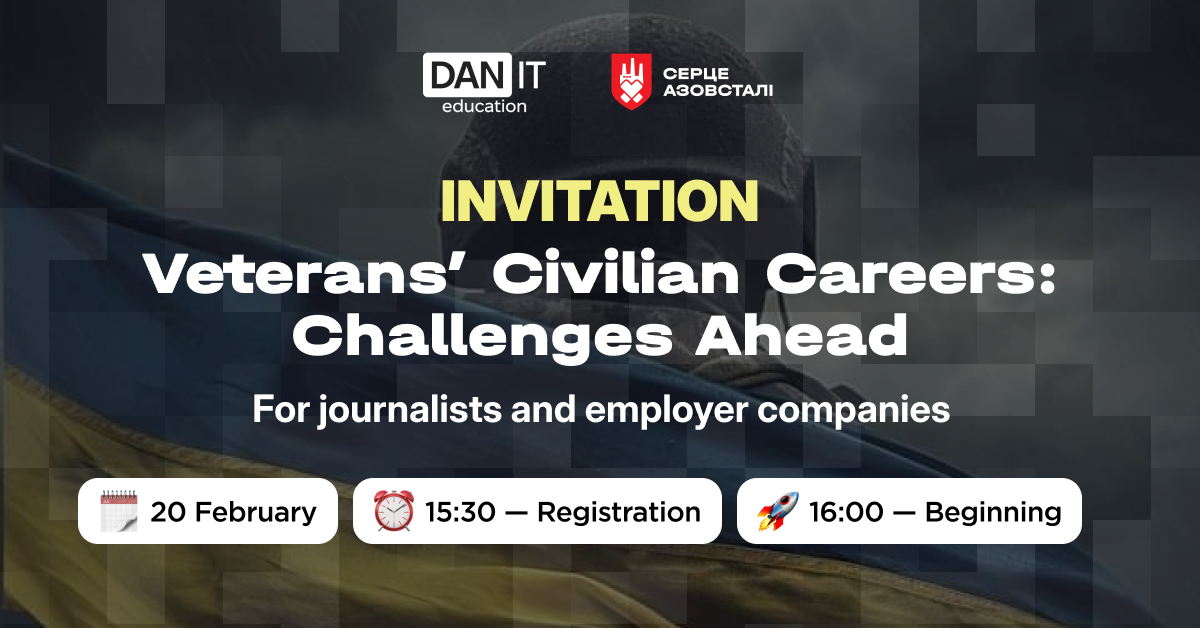
We live in a country where veterans are not statistics. They are people we grab coffee with, work alongside, live in the same building — sometimes even in the same home. And sometimes, they are us.
The transition from military to civilian life is not just about résumés and job openings. It’s about helping veterans regain a sense of normalcy. It’s about mental health, work, stability, and support — and about a society that is still learning how to respond to these challenges.
At a discussion panel participants will talk honestly about real challenges and to look for real solutions. Not promises, but practical paths: how a person after the war finds a new profession, goes through training or an internship, and gets a job. And what this requires from all of us — society, business, and the state.
Key topics include:
- What the real path to a civilian career looks like for veterans — and what they go through after the front line?
- The role of psychological support at the very start of this journey?
- How businesses can create employment programs for veterans that actually work, not just look good on paper?
- The barriers that exist today — and what we can change right now?
Participants will see what the journey from education to employment looks like through the lens of DAN.IT educational programs and veteran support initiatives by the NGO “Serce Azovstali.” Also will hear a veteran’s personal reskilling story, along with insights from career consultants, psychologists, and employers.
We already live in a reality where veterans are everywhere. The real question isn’t whether we’re ready to integrate them into civilian life — it’s whether we’re ready to change the system and ourselves for the people who defended our freedom.