Skip to content
IT Ukraine Association
Eng/Укр
  • About the Association
    • About us
    • Ambassadors of the Association
    • Our benefits
    • Annual Reports
    • Testimonials
  • Areas of work
    • IT Industry Development & Advocacy Center
    • IT Ukraine Global
  • The Association’s Committees
    • The AgriTech Committee
    • The CyberTech Committee
    • The FinTech Committee
    • The EdTech Committee
    • The AI Committee
  • Є-Support!
  • Partners & members
    • IT companies
    • Partners
  • Latest news
    • Association’s news
    • Industry News
    • Blogs
  • Calendar
IT Ukraine Association
Eng / Укр
Eng/Укр
Join ITU
  • About the Association
    • About us
    • Ambassadors of the Association
    • Our benefits
    • Annual Reports
    • Testimonials
  • Areas of work
    • IT Industry Development & Advocacy Center
    • IT Ukraine Global
  • The Association’s Committees
    • The AgriTech Committee
    • The CyberTech Committee
    • The FinTech Committee
    • The EdTech Committee
    • The AI Committee
  • Є-Support!
  • Partners & members
    • IT companies
    • Partners
  • Latest news
    • Association’s news
    • Industry News
    • Blogs
  • Calendar
Home
/
Blogs
/
Backups That Cannot Be Deleted: 5 Questions for the CTO of the PARKOVYI Data Center

Backups That Cannot Be Deleted: 5 Questions for the CTO of the PARKOVYI Data Center

Publication date:

  • 17.09.2025

Publication from:

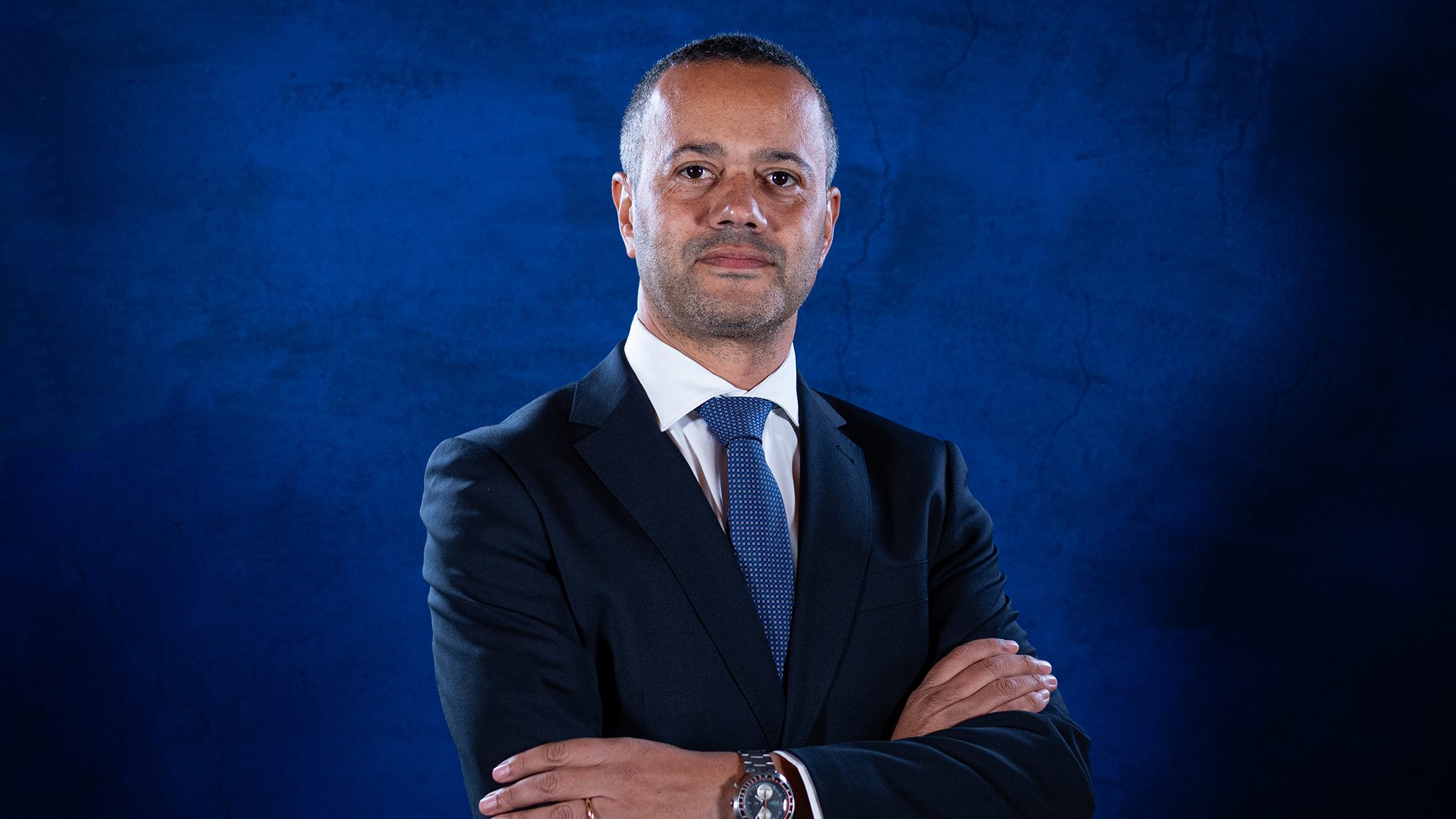
Serhii Zabirka, CTO of the PARKOVYI Data Center

Today, cyberspace is a full-fledged battlefield: cyberattacks target not only IT systems but also their backups. As a result, even companies with properly configured backup systems risk losing critical data.


To prevent this,  ITU Member PARKOVYI Data Center has introduced the Retention Lock Backup service — a solution that locks copies for a defined period and makes their deletion impossible, even by an administrator.


We asked the CTO of the PARKOVYI Data Center, Serhii Zabirka, five key questions about this solution to understand its main capabilities.

  1. What distinguishes Retention Lock Backup from traditional backup?  

Serhii Zabirka: The main difference is that the backup copy becomes “frozen” for a certain period of time. This means it cannot be modified or deleted — not even accidentally, and not even by an administrator.


In classical backup systems, there is always a risk: human error, internal mistakes, or malicious actions can lead to the loss of backups. Retention Lock eliminates this risk.


For businesses and the public sector, this means that in the worst-case scenario — during a large-scale cyberattack or even the physical destruction of part of the infrastructure — you will still have a guaranteed protected reserve that can be used for recovery.


2. What technologies form the basis of this solution?


Serhii Zabirka: We used a combination of Dell DataDomain and Veeam Backup & Replication. This ensures a balance between reliability, speed, and resource efficiency.


Dell DataDomain provides hardware-level protection at the storage layer. It controls data integrity, blocks unauthorised changes, and guarantees reliable access to backups at any time.


Veeam is the platform that manages the processes of backup, replication, and recovery. It ensures convenient control and transparency of all processes.


The Retention Lock feature acts as a “protective shield,” locking backups for a specified period. As a result, the client receives not just an archive of data but a full-fledged cyber resilience tool.


3. Who benefits most from Retention Lock Backup and in what scenarios?


Serhii Zabirka: This solution is designed for those dealing with critical data. Primarily:

  • government agencies;
  • financial institutions and banks;
  • large corporations, international companies, and medium-sized businesses in Ukraine.
 

Experience shows that most medium-sized Ukrainian companies were unable to recover after cyberattacks precisely due to the loss of backups. A single successful attack that deletes backups can put a business “on pause” for weeks — or even permanently.


Retention Lock Backup is especially useful in situations involving:

  • ransomware threats;
  • human errors when an administrator accidentally deletes data;
  • regulatory requirements.
 

In fact, it is insurance for the worst-case scenario.


4. What technical nuances should be considered during implementation?


Serhii Zabirka: There are several aspects we always highlight for clients:

  1. Time synchronisation. If servers do not have identical time settings (via NTP), failures in applying the lock may occur.
  2. Retention limits. Retention Lock allows you to set minimum and maximum “freeze” periods. The minimum is 7 days, the maximum is over 100 years. This must be considered in storage policies.
  3. Lock modes. There are governance and compliance modes. It is important to choose the right one from the start because changing it later is impossible without a complete reimplementation.
 

These nuances are not complex, but proper configuration is the key to ensuring the system works flawlessly.


5. How does Retention Lock Backup fit into a broader cybersecurity strategy?


Serhii Zabirka: I always emphasise that cybersecurity must be comprehensive. Retention Lock Backup is a key element of such an IT architecture and reveals its potential when combined with other solutions. For example:


MFA — protects access even if a password is compromised.

PAM — controls administrator actions and ensures password rotation.

WAF — protects web applications at the L7 level.


In such a configuration, Retention Lock Backup becomes the final guarantee of data integrity. Retention Lock Backup is more than just technology. It is confidence in the future of your data, regardless of what happens around you — cyberattacks, human errors, or physical threats.


For government institutions and businesses, it becomes the foundation of digital resilience. And it is precisely such solutions that shape a new security standard in an environment where the main priority is never to lose data.


1,602
FacebookXLinkedInTelegramShare

See also:

обкладинка (eng)
Тетяна Дашевська, CEO та Co-founder SoftBees

Mentorship as a Driver of Innovation: How SoftBees Helped Briefix Transform Ideas into Validated AI Solutions

In today’s fast-paced tech world, a startup’s success depends not only on clean code but also on the product’s ability...

Read more
  • 13.05.2026
AdaptisxKillerhouse
Anton Sadykov, Chief Innovation Officer at Adaptis

Connectivity as Part of the Filmmaking Process: the Adaptis and Killhouse Case

Killhouse is a Ukrainian tactical action film directed by Liubomyr Levytskyi. Its creators describe it as the first film of...

Read more
  • 12.05.2026
tg_image_2503231085
IIT DISTRIBUTION

AI in Cybersecurity: Key Risks, Data Breaches, and Security Automation

Artificial intelligence is rapidly transforming processes across both business and the public sector. Today, employees активно use AI for drafting...

Read more
  • 01.05.2026
Monitoring UA
Fedir Kompaniiets, Co-founder and CEO, Gart Solutions

Monitoring Is About Whether Your Business Works

There’s a question I ask at almost every first meeting with a new client. I ask it deliberately — almost...

Read more
  • 30.04.2026
Subscribe to our updates
Contacts

Address: 04071, Kyiv,
str. Yaroslavska, 58 (Astarta
Organic Business Centre)

Phone:+38 099 266 39 03

E-mail:
hello@itukraine.org.ua

Address: 04071, Kyiv, str. Yaroslavska, 58 (Astarta
Organic Business Centre)

Phone:+38 099 266 39 03

E-mail:
hello@itukraine.org.ua

  • Facebook
  • LinkedIn
  • Instagram
  • YouTube
Share to...
BufferCopyEmailFacebookFlipboardHacker NewsLineLinkedInMessengerMixPinterestPrintRedditSMSTelegramTumblrXVKWhatsAppXingYummly