As part of the second phase of the AgriTech Business Accelerator Program, a delegation of Ukrainian AgriTech companies spent two weeks in Silicon Valley, gaining first-hand exposure to one of the world’s leading innovation ecosystems.
The delegation brought together technology companies and startups developing innovative solutions for agriculture — from IoT platforms for precision farming and agricultural drone services to agri-data analytics, supply chain management, and climate-smart agriculture. Participating companies included HEFT, Raymetra, Y-Harvest, FEODAL, Howcow, INNONEERS, AGRO CHERNIAK, Valvix, PROFEED TECHNOLOGY, SAFIS.АІ, Agrico Ukraine, b2beings, Gis-point.ltd, Almexsoft Ukraine, Sirrocco Energy. A catalogue of participating companies is available via the link below.
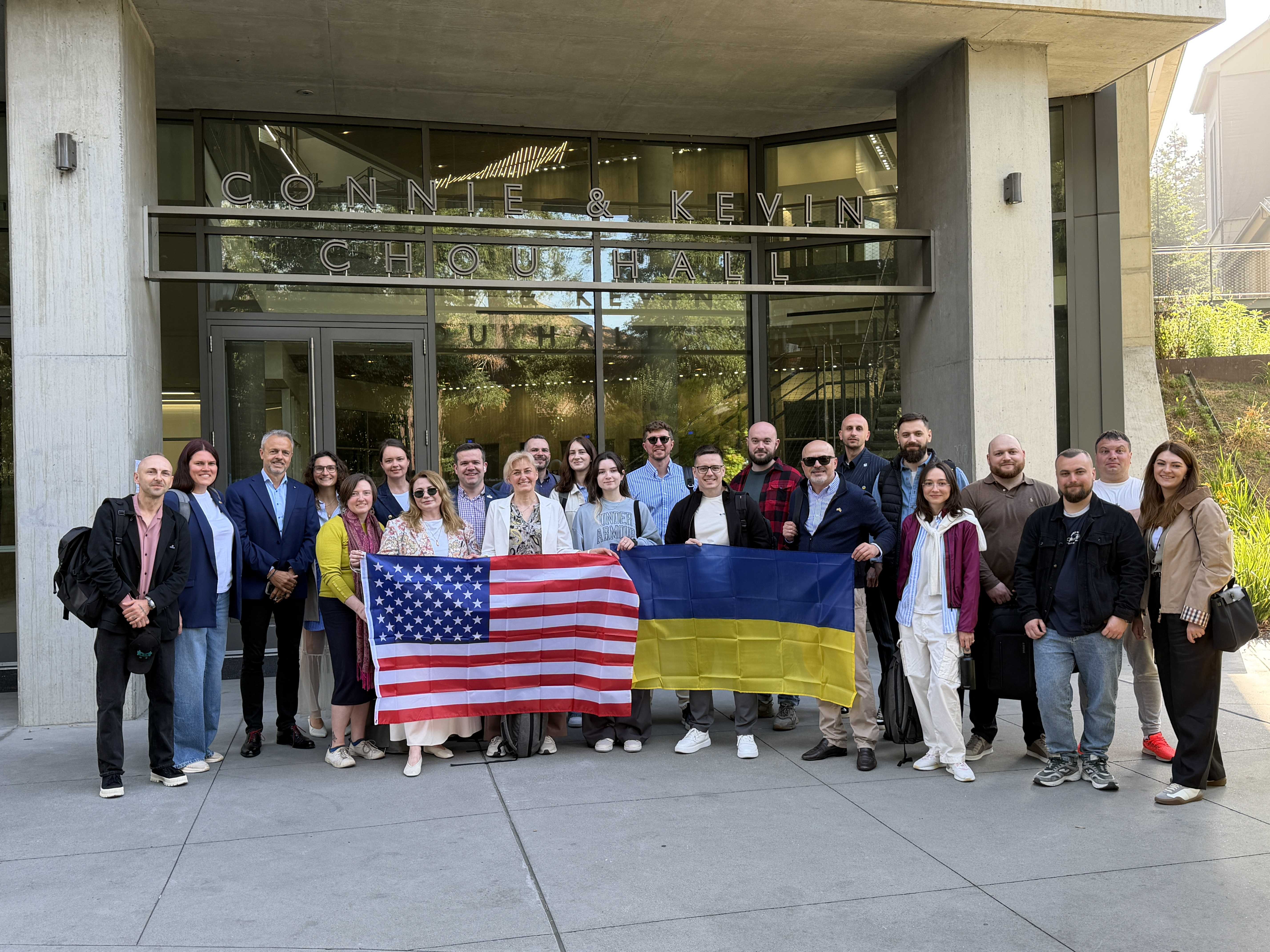
Throughout the residency, participants engaged with faculty from UC Berkeley Haas School of Business, entrepreneurs, investors, and Silicon Valley practitioners who are shaping global approaches to artificial intelligence, innovation, venture capital, and AgriTech.
The program featured experts including Gauthier Vasseur (UC Berkeley Haas School of Business), Barry Katz(California College of the Arts / Stanford University), Natalie Lambert (GenEdge Consulting, former Google), Gigi Wang (UC Berkeley / Sutardja Center for Entrepreneurship & Technology), Caroline Simard (Northeastern University), Dan Klein (Stanford Graduate School of Business), Ellen Bruno and Michael L. Anderson (University of California, Berkeley), George Panagiotakopoulos (University of California, Berkeley), as well as experts from SRI International and Future Frontier Capital.
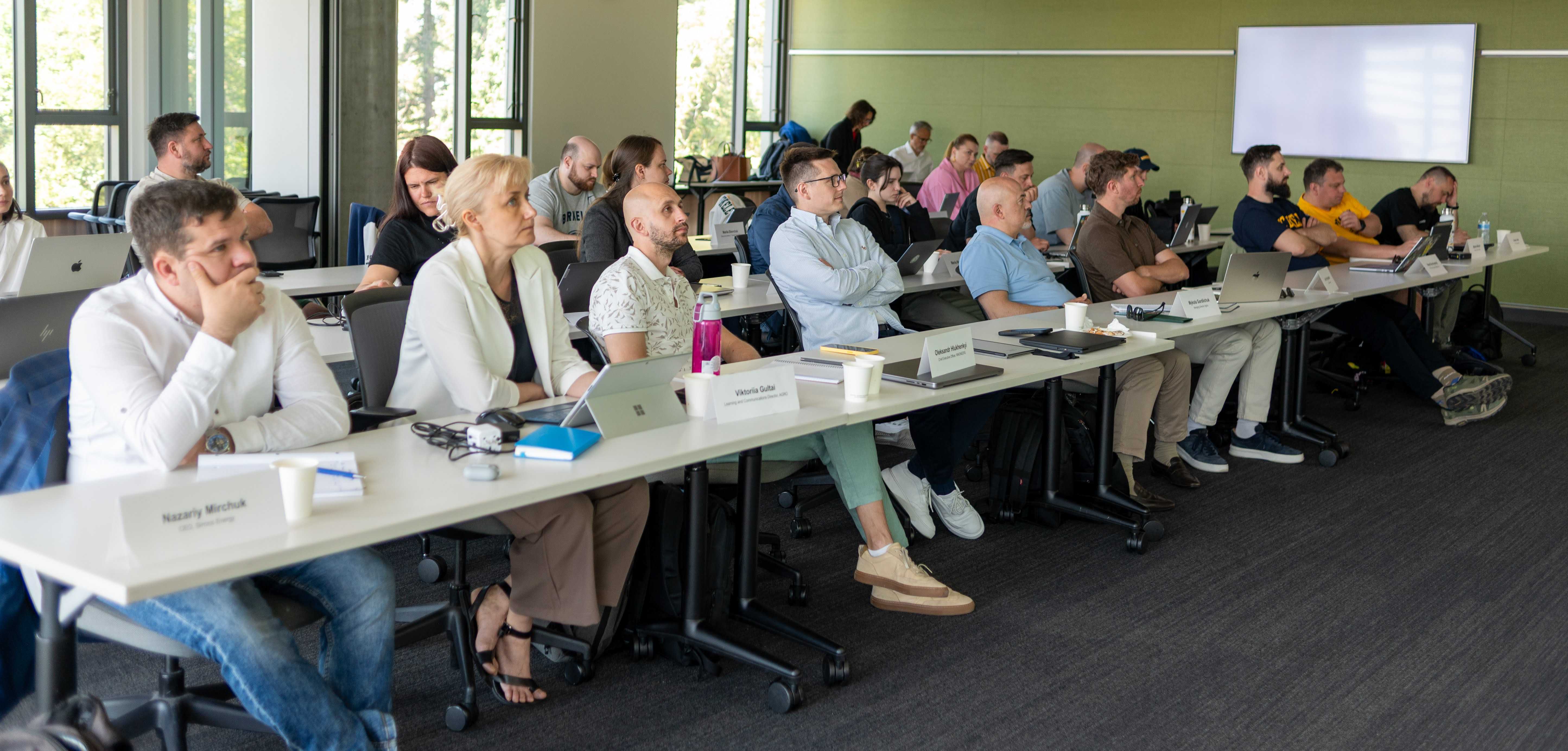
Although the program covered a broad range of topics—from AI and data strategy to fundraising and product development—one message consistently emerged: successful startups are built not only around technology, but around their ability to learn faster, validate assumptions, and continuously create value for customers.
In Silicon Valley, speed is not measured solely by how fast a product is developed. What matters even more is how quickly companies learn—how rapidly they test assumptions, engage with customers, analyze feedback, and adjust their strategy. Failure is not viewed as a setback but as an essential part of building better products and stronger companies.
Artificial intelligence alone does not make an organization more effective. If business processes remain fragmented and data is poorly structured, AI simply amplifies existing inefficiencies. Its greatest value lies in automating repetitive tasks, accelerating analysis, supporting decision-making, and enabling teams to focus on higher-value work.
Another recurring theme throughout the program was that the future of AI begins with data – not models. For AgriTech companies, this means designing processes that ensure data is structured, accessible, and ready for analysis. The quality of data ultimately determines how effectively organizations can leverage analytics, forecasting, automation, and AI-driven solutions.
A dedicated part of the program focused on engaging with investors, partners, and potential customers in the U.S. One of the key lessons was that a successful pitch is not about telling the entire story of your company. Its purpose is to spark interest and open the door to the next conversation. Equally important is the ability to tailor your message to different audiences—whether investors, corporate partners, customers, or end users.
The program also highlighted how investor expectations continue to evolve. A compelling vision is no longer enough. Investors increasingly look for validated pilots, measurable outcomes, and evidence demonstrating that a solution creates tangible value. Today, pilot projects are viewed not only as product tests but as critical trust-building mechanisms for future customers, investors, and strategic partners.
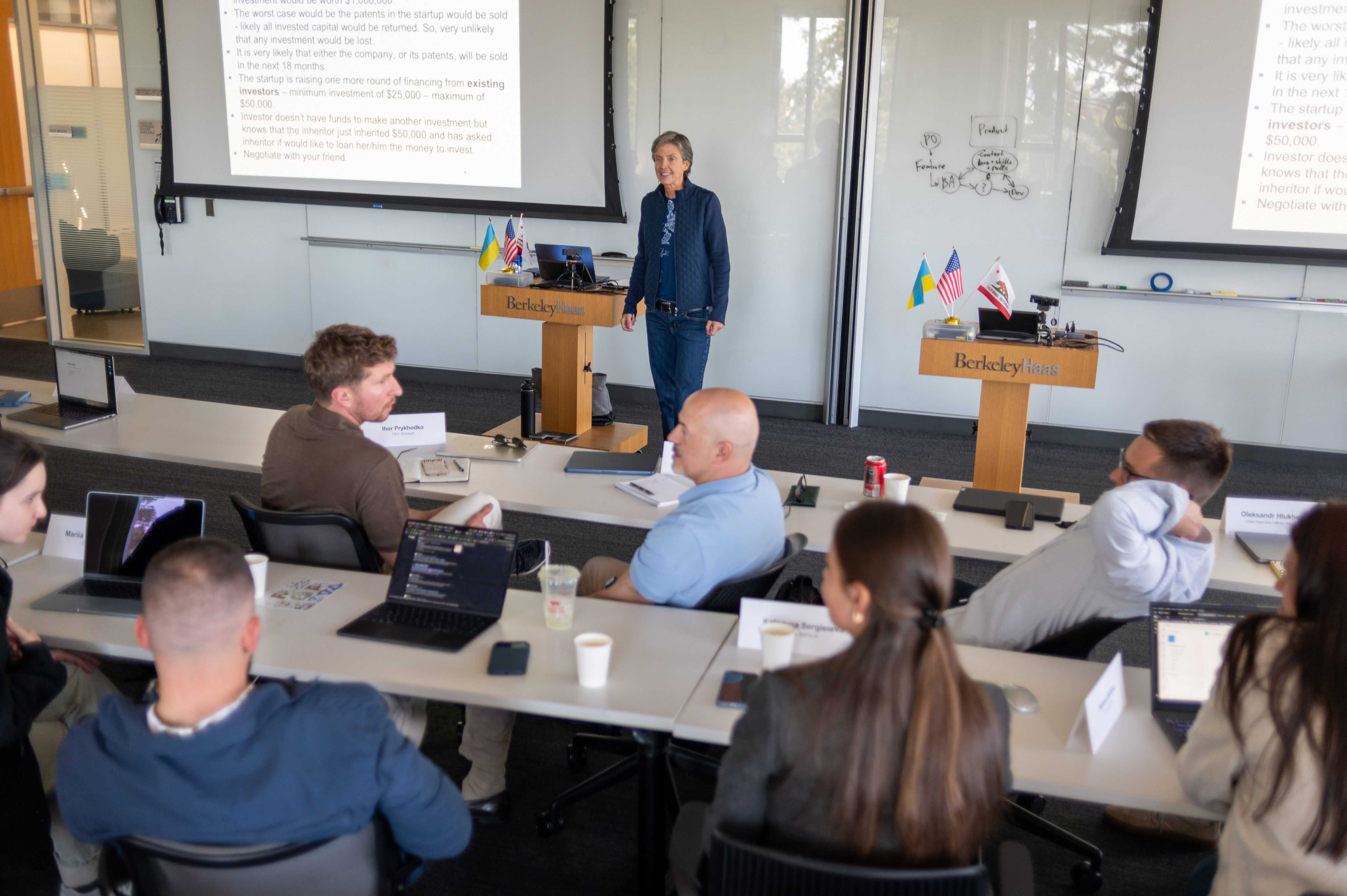
For the participating Ukrainian AgriTech companies, the residency offered much more than an introduction to UC Berkeley and Silicon Valley. It became an opportunity to rethink their products, business models, and long-term growth strategies.
One of the strongest takeaways was the understanding that meaningful innovation does not happen in isolation—it is created through collaboration within a strong innovation ecosystem.
One of the most important lessons for me was realizing that true innovation doesn’t emerge on its own. It is built at the intersection of science, research, entrepreneurship, investment, and communities that constantly challenge ideas, test their resilience, and accelerate their implementation,
says Ihor Prykhodko, CEO of Almexoft.
Beyond strategic insights, participants returned with practical approaches to working with AI and data, product development, investor readiness, and international market expansion.
Ukraine’s agricultural sector is already highly digitalized, while global markets increasingly demand speed in developing and scaling new solutions. For entrepreneurs, this means continuously adapting and thinking several steps ahead. The Berkeley program broadened our perspective, challenged our approach to product development, and provided valuable management experience,
says Andrii Demianovych, Founder & CEO of FEODAL.
Equally valuable were the professional connections established during the residency, a deeper understanding of the U.S. innovation ecosystem, and the opportunity to engage with a global community of entrepreneurs, researchers, investors, and industry experts.
Technology can be learned and knowledge can be acquired. But the greatest value programs like this offer is the people. They broaden your perspective, challenge your thinking, and become a source of new ideas, partnerships, and opportunities,
says Mykola Hordiichuk, Managing Director of Agrico.

The next phase of the program will focus on mentorship, helping participating companies translate these insights into practical business strategies, strengthen international partnerships, and develop new commercial opportunities. Ultimately, the goal is to transform the experience gained in Silicon Valley into tangible business outcomes, strategic collaborations, and sustainable international growth.
AgriTech Business Accelerator Program made possible by the generous support of the United States Government provided through the Agriculture Growing Rural Opportunities (AGRO) Activity implemented by Chemonics International. The program is co-developed together with the Fisher Center for Business Analytics at the University of California, Berkeley, and implemented in partnership with the IT Ukraine Association.
The contents are the responsibility of the IT Ukraine Association and do not necessarily reflect the views of the United States Government.